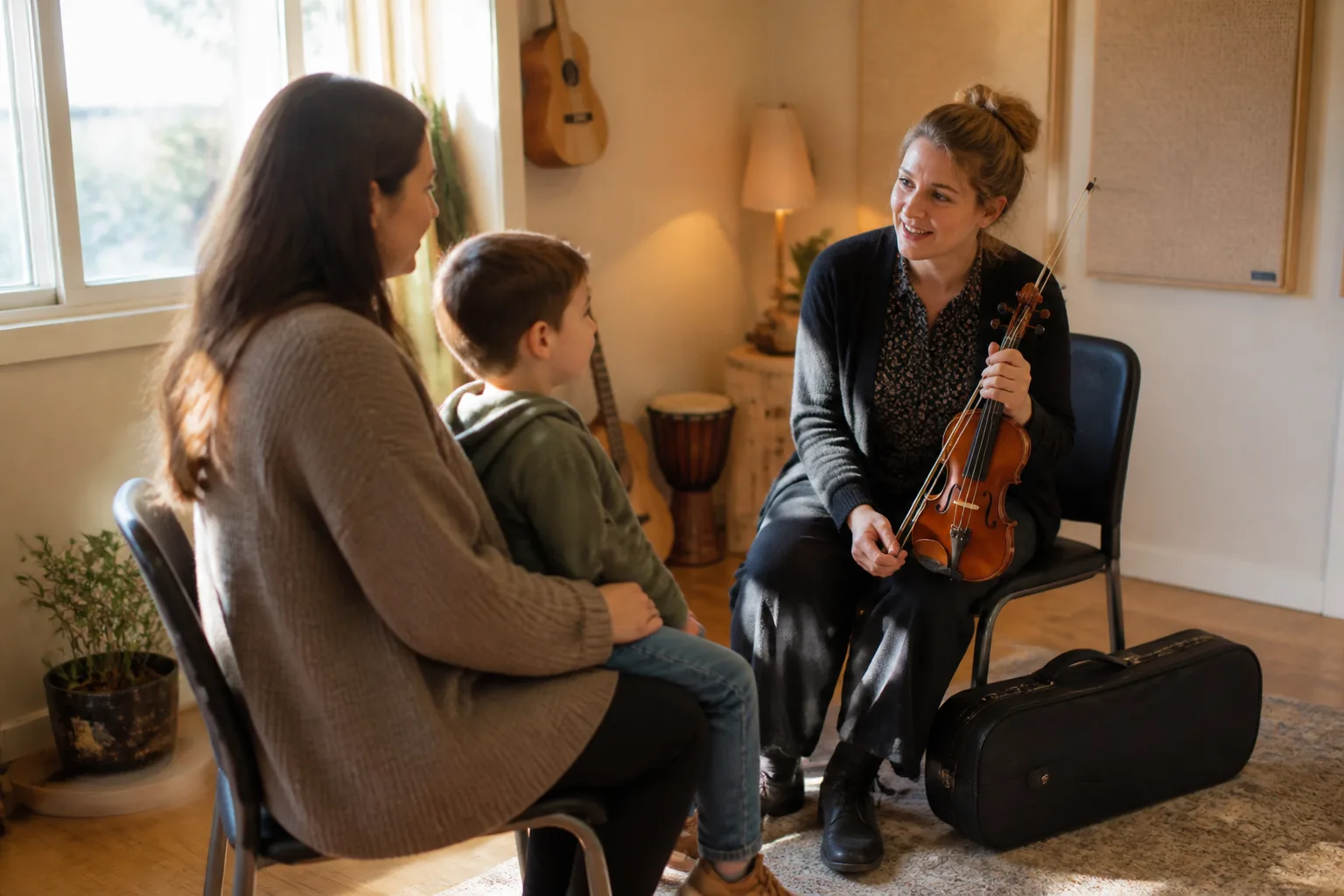
The first booking goes a lot smoother if you know exactly what you are signing up for. There is a big difference between a play-based group session, private instrument tuition, and a full ensemble. Before you start traveling from New Westminster to Burnaby or from Mount Pleasant to a Vancouver programme, make sure you confirm the exact location, lesson length, the role you play as an adult, and what the expectations are for practice at home. Also, wait for the teacher's advice before you go out and rent or buy an instrument.
Before contacting a provider
Start by writing down the child's age, school grade, any musical experience they have, and what actually sparked their interest. Saying a child "likes music" is a fine starting point, but it isn't enough to find the right format. A preschooler who loves singing probably needs a movement-based group. A school-age child who specifically asks for the violin might be ready for individual instruction and regular home practice.
You also need to decide what your family can actually repeat every week. Think about the total time commitment: the travel from school, the lesson itself, and the trip back home. A short after-school lesson can turn into a very long evening if the driving route crosses the city during rush hour.
Confirm the exact programme
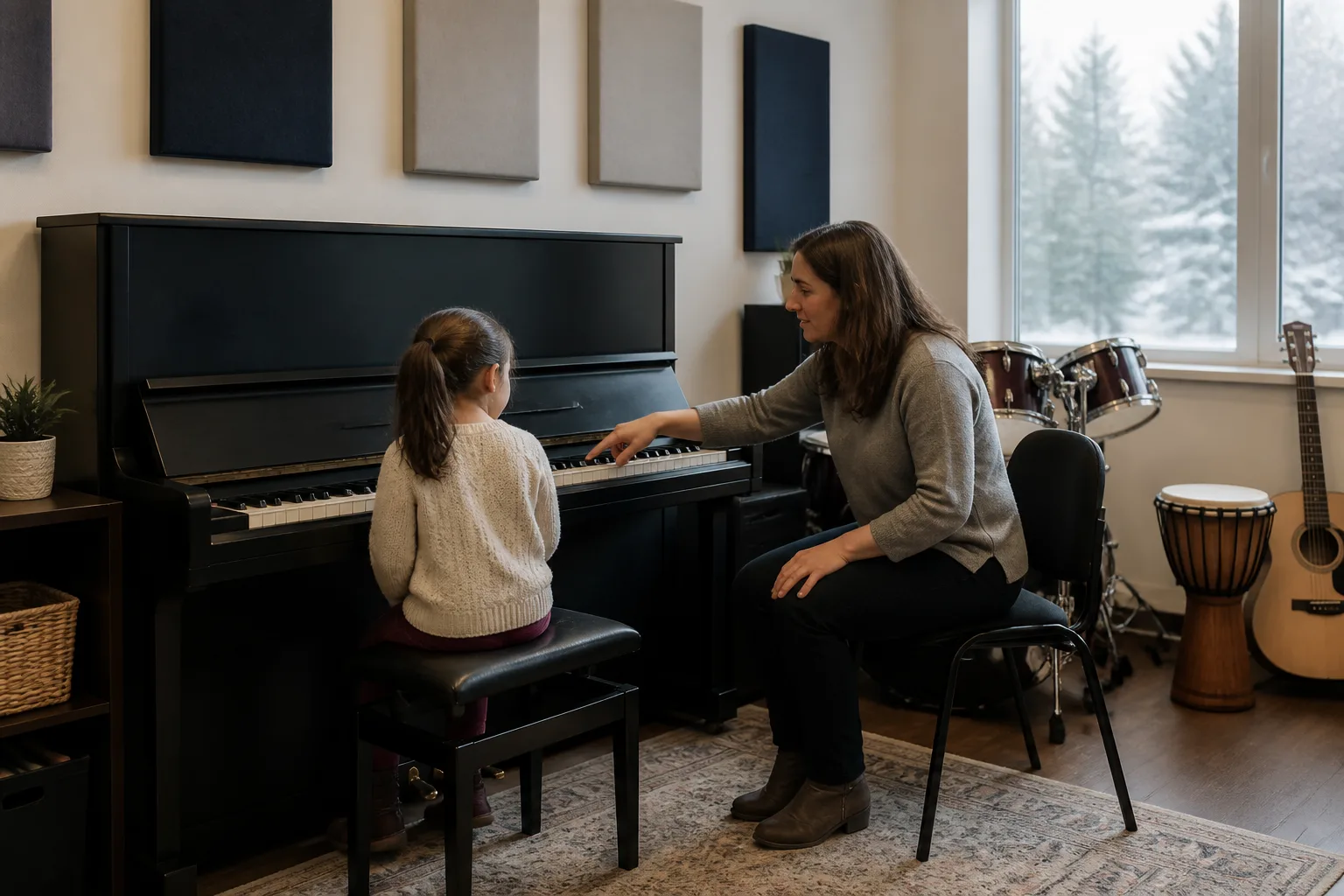
Vancouver Academy of Music offers several different formats at its Vanier Park facility, including early-years group programmes, private lessons, and ensembles. Music Star Learning Center in Burnaby offers individual instrument instruction for piano, guitar, and violin. Keep in mind these are just examples to investigate, not interchangeable products.
Ask the provider for the specific name of the class, the age or experience range it covers, and the actual teaching address. If the programme requires an application, teacher match, or an assessment, find out what that process looks like before you register. A general programme page on a website doesn't guarantee that a specific teacher, instrument, or time slot actually has an opening.
Use this booking checklist
Format and adult role
- Is this individual, semi-private, or group instruction?
- Does an adult participate in the lesson, observe, wait nearby, or leave the room?
- How many learners and instructors are usually in the room?
- If the child is hesitant, can they watch a session before joining?
- Are siblings allowed in the teaching room?
Don't assume every early-years class follows the same rule for parents. Some groups require caregivers to participate fully, while others move toward child-only instruction as they progress.
Instrument and materials
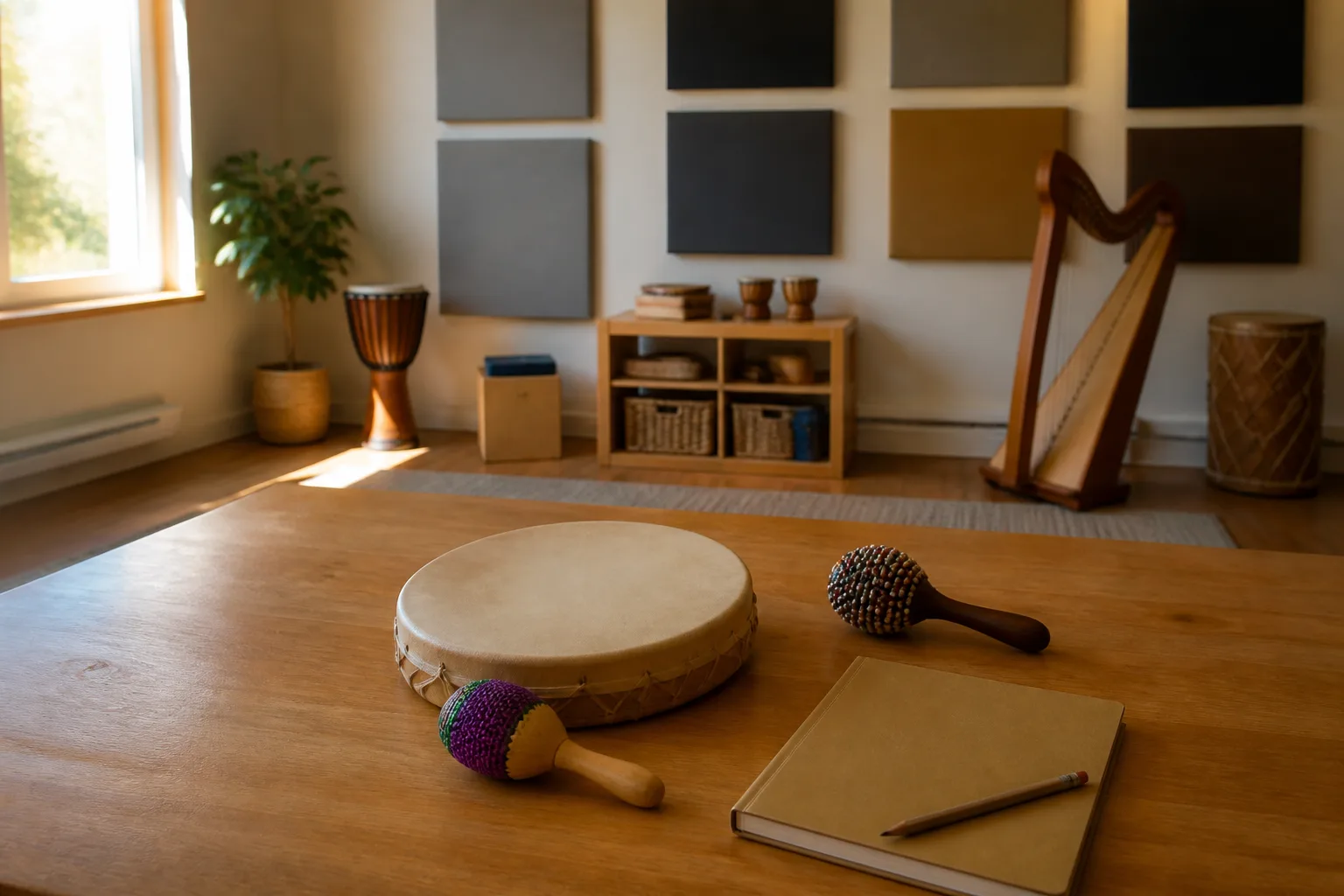
- Which instrument or musical activities will the child use?
- Is equipment provided during the lesson?
- What kind of instrument access is expected at home?
- Do you need to buy specific books, apps, or other materials?
- Should the teacher advise on instrument size or setup before you rent anything?
If it is piano, ask what kind of home keyboard is suitable. For violin or guitar, ask about the physical fit. Avoid buying things based on a generic age guide before the teacher confirms what actually works for their specific programme.
Schedule and commitment
- How long is each lesson, and how many lessons are included in a term?
- Is enrolment based on a single visit, a month, a semester, or the whole academic year?
- Does registration renew automatically?
- What happens during school holidays or when the provider is closed?
- What is the policy for student absences, teacher absences, and makeup lessons?
A trial lesson can be useful, but clarify its price, whether it is with the teacher who will actually be teaching the ongoing lessons, and what the commitment looks like afterward. A one-off meeting might not reserve the same time slot or the same instructor.
Complete cost
Ask for the total cost, not just the hourly lesson rate. You need to know about registration fees, material fees, instrument rentals, required books, and any extra costs for recitals, examinations, or ensembles. Ask which activities are optional. Don't assume a performance opportunity is automatically included in a standard beginner lesson.
Access and communication
Be practical when describing support needs. A child might need instructions given one at a time, a physical demonstration, a predictable lesson outline, help with setting up equipment, or a quiet transition into the room. Ask what the teacher can provide within their specific format.
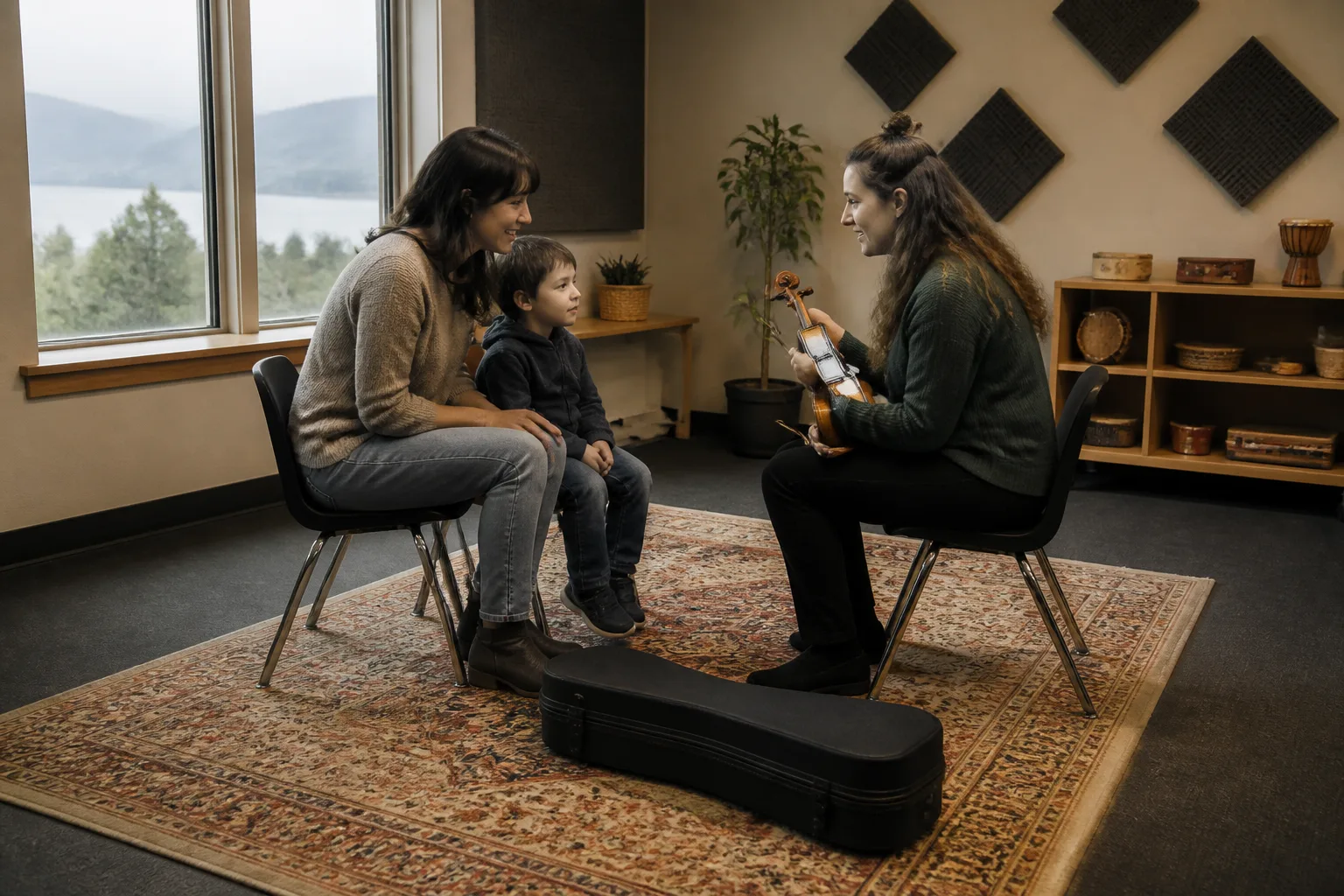
Establish how you will receive updates. Will the teacher speak to you briefly after each lesson, send notes, or use an online system? If you are expected to help with home practice, ask how the assignments will be explained to you.
Pack for the first session
Bring only what the provider specifically asks for: the confirmed instrument, books, water, or other necessary materials. Label everything and arrive early enough to find the room without feeling rushed. For a group class, explain to the child whether you will be participating with them or waiting nearby. For individual tuition, agree on where you will be waiting when the lesson ends.
Afterward, ask the child what felt clear and what felt difficult. Confirm the next practice step with the teacher before you make any large equipment purchases. A good first booking leaves the family knowing what happens each week, what is expected at home, and how to ask for help.