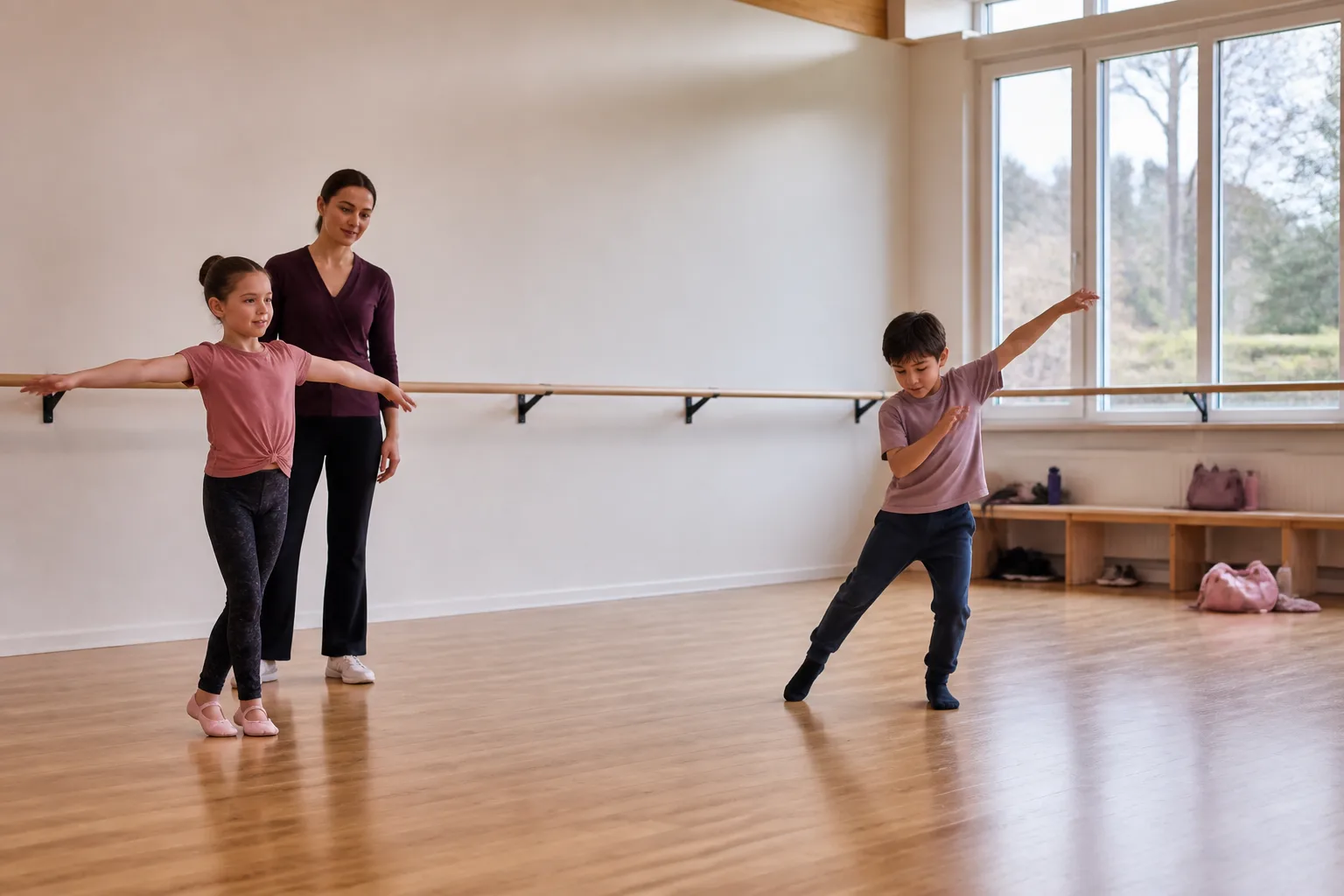
You should compare the purpose and commitment of a class before you start comparing style names. Two beginner classes might look identical on paper, but they can differ significantly in teaching pace, performance expectations, and weekly schedules, even if they use the exact same music.
Creative-movement and combination classes
Ask what the combination contains
These classes usually introduce rhythm, balance, shapes, and several different movement styles. You should ask how much of the class is teacher-led versus student-led, how transitions work, and whether the description actually names the specific techniques being taught. While these classes are great for helping a child sample different types of movement, the studio should be able to explain exactly what progression follows that sampling.
Ballet
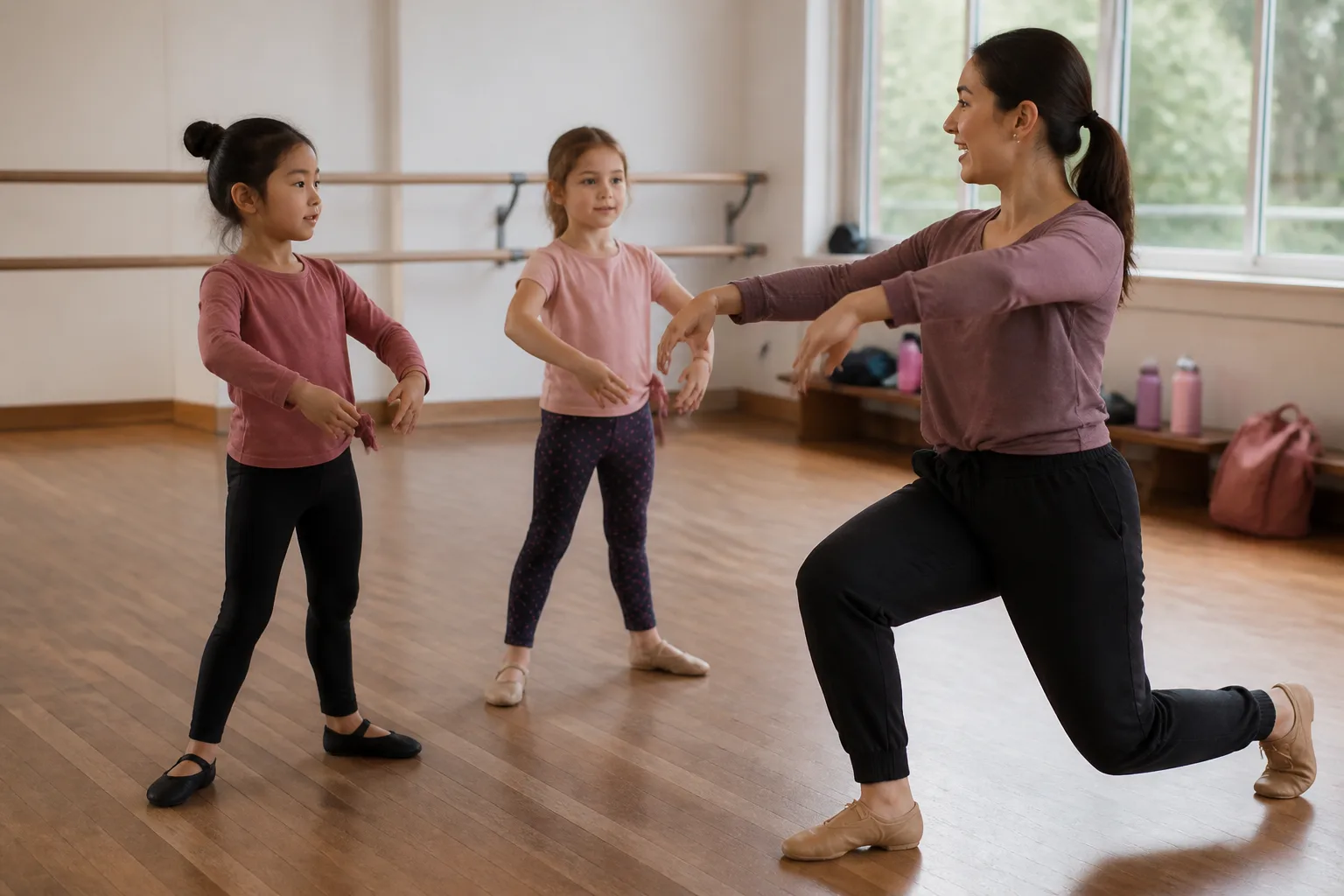
Ballet classes typically emphasize alignment, vocabulary, and repeated technique. You need to ask whether the class is recreational or if it follows a specific examination or performance pathway. It is also worth asking what clothing is required and at what point specialized footwear becomes necessary. Do not assume a young beginner needs the same equipment as an older level.
Jazz and contemporary programmes
Ask how the studio defines the style, because these labels cover a wide range of different music, technique, and choreography. You want to find out whether the class builds a technical foundation, prepares a routine for a performance, or tries to do both.
Hip-hop and street-style classes
Ask which specific styles and age groups the class serves and whether the choreography is actually selected for children. You should also confirm the rules regarding footwear and floor usage. A high-energy description in a brochure doesn't tell you anything about the actual class pace, how much individual feedback the kids get, or the level of performance commitment.
Tap
Tap uses footwear as a sounding instrument, so you should ask when tap shoes are required, if the studio provides trial pairs, and how they manage the noise level. Check to see if the class concentrates on rhythm, vocabulary, choreography, or a specific recital routine.
Acro, gymnastics and dance
Similar names do not mean the same instruction
A listing might offer both dance and gymnastics, but these are separate activities. Ask which specific skills belong to the registered class, what equipment is used, what kind of instructor preparation is in place to support them, and whether acrobatic work is an optional add-on or a central part of the curriculum. Do not pick a class based on a business name alone.
Compare the same five dimensions
For every option you consider, record the class goal, the teacher and group fit, the weekly schedule, the performance or exam commitment, and the total annual cost. Arts Umbrella in Vancouver, Chilliwack Gymnastics and Dance, and Defy Gravity Dance Company Inc. in Richmond are good directory starting points for this. Always confirm current regular classes and specific programme details directly, especially if the listing focuses on parties or rentals.
Compare progression, not stereotypes
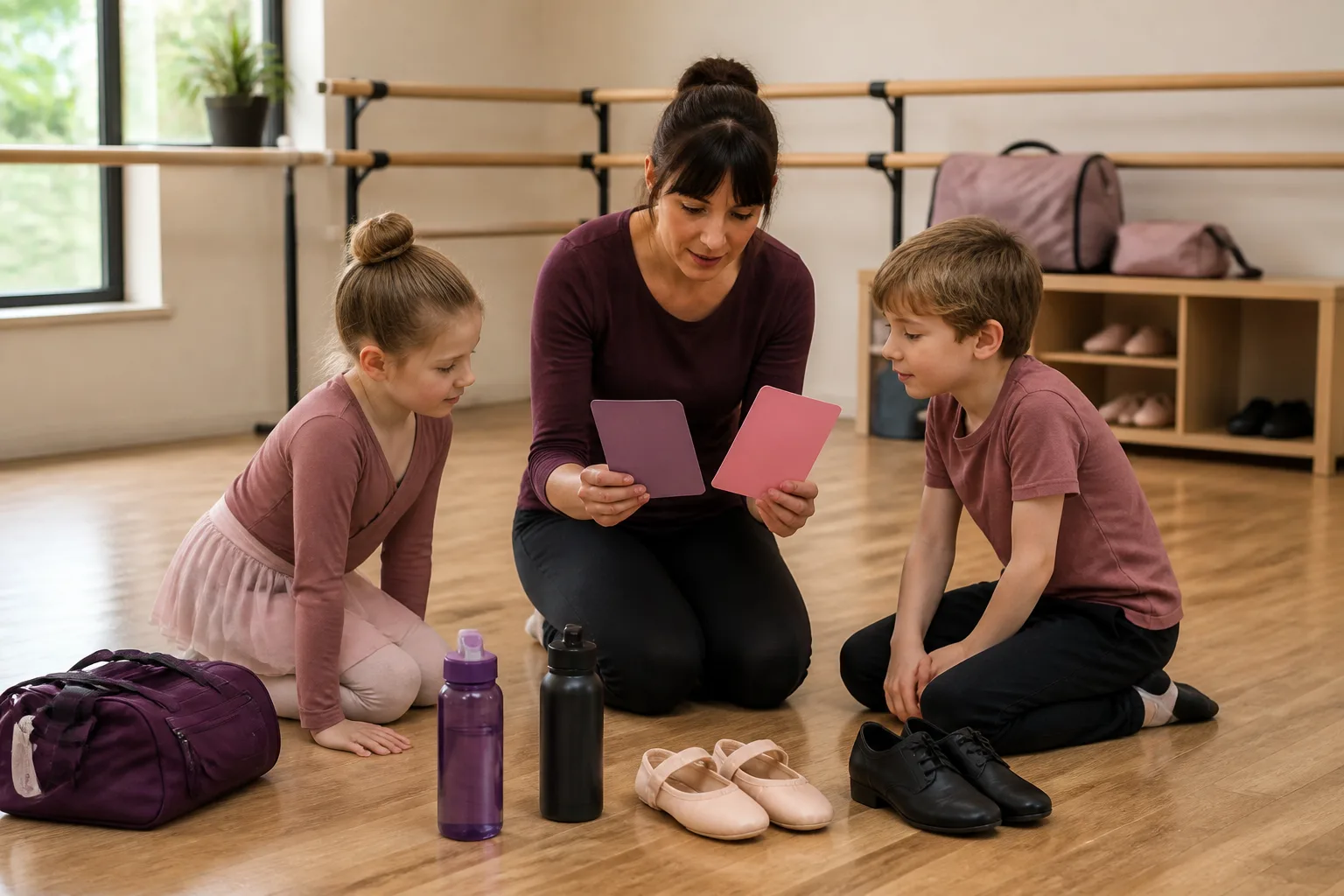
Ask each teacher what a beginner should be able to achieve after one term and how they plan to get them there. A ballet class might be very playful, a hip-hop class might be highly structured, or a combination class might be technically demanding; the label alone doesn't tell you the teaching style. Ask for an example of a normal lesson and find out how an absence affects the student's place in the sequence.
You should make a child-focused matrix including these factors: repeated technique, creative choice, music, group choreography, performance, and home practice. Mark any area as “unknown” until you actually get an answer. This prevents you from letting assumptions about a dance style's "personality" replace actual evidence. When comparing studios in Vancouver, Richmond, and Chilliwack, be sure to check the branch timetable, as shared programme names can still have different teachers and different student cohorts.