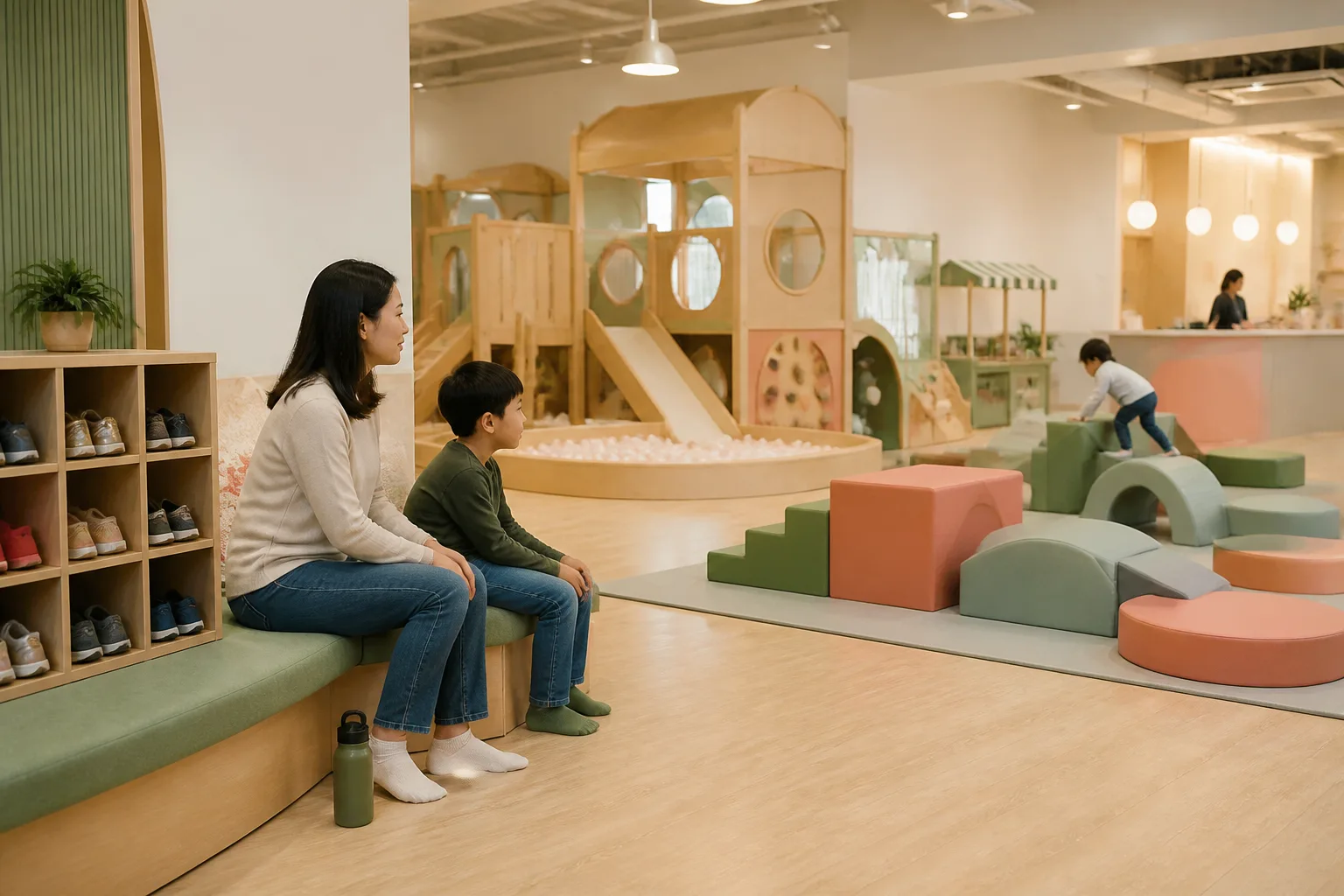
Indoor play listings can be confusing because they mix different things: soft-play structures, mixed-attraction venues, or supervised programmes. You should compare these categories separately. For a family near Maillardville, the most important question isn't which venue has the most equipment, but rather what the youngest child can actually use and what an adult can realistically supervise.
Soft-play centres
Soft-play venues usually revolve around padded climbing frames, slides, tunnels, and specific age-specific areas. These are great for active, open play, but the physical structures can make it hard to keep an eye on your kids. Before you go, find out if adults are allowed to enter the equipment, how toddler spaces are separated from older kids, and which age groups the main equipment actually serves.
HANABABY WORLD in New Westminster offers parent-child indoor play. You should confirm their current play areas and admission rules beforehand. Don't assume every child in a broad age range can use the same equipment.
Open play and supervised programmes
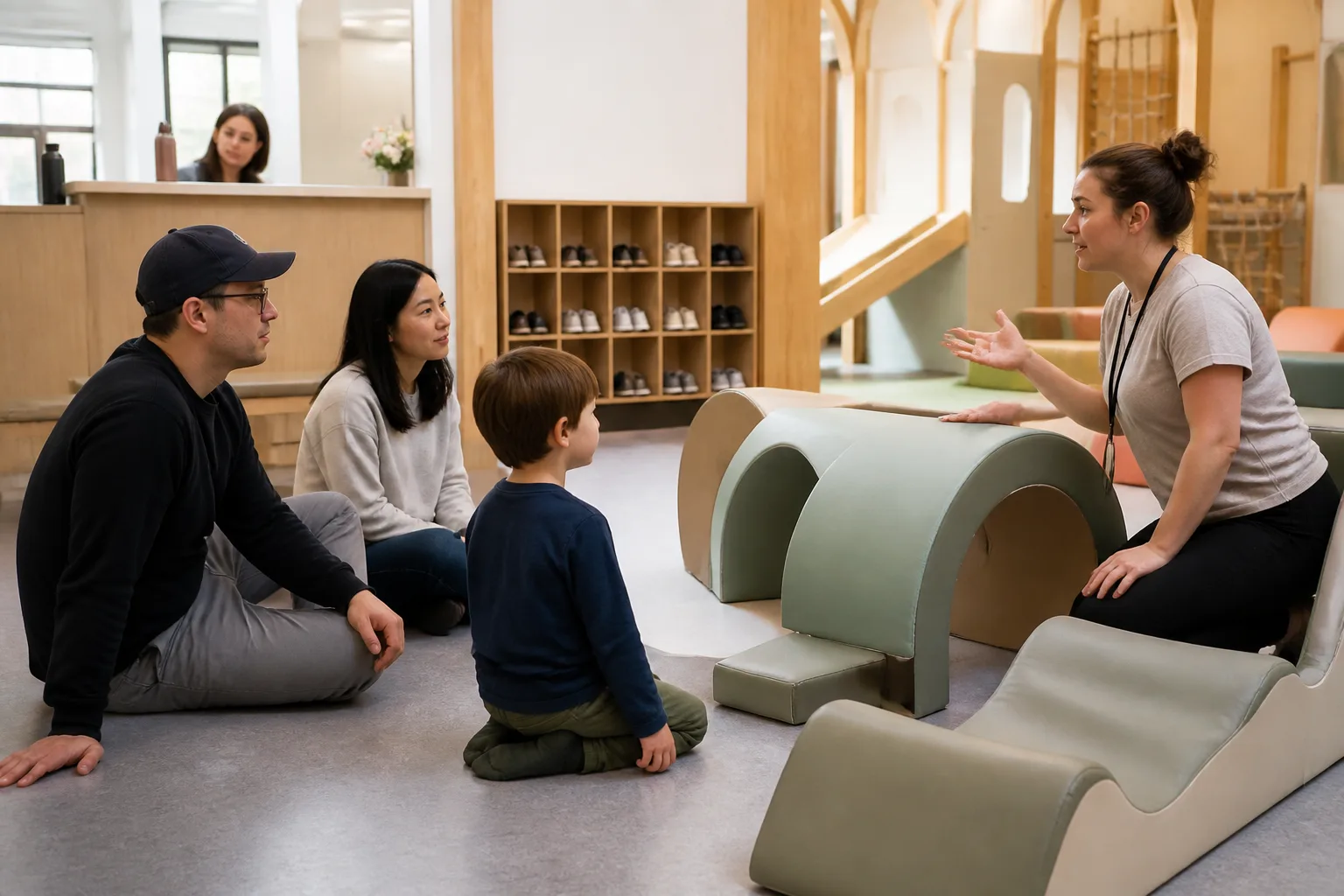
INNOPLAY in North Vancouver is a good example of the difference between parent-accompanied open play and supervised drop-off services. These formats are not the same. They differ in terms of eligible ages, how much responsibility the caregiver has, and the booking terms. Just because a venue has staff on the floor does not mean open play counts as childcare.
You need to know if a programme is free exploration, a guided activity, or drop-off supervision. Also, check what the requirements are for identification at collection and how staff contact caregivers.
Mixed-attraction venues
A mixed venue might combine a standard play structure with trampolines, games, or rides. Play Abby has different indoor-play offerings depending on the branch, while other venues might separate activities by height, waivers, or extra payments.
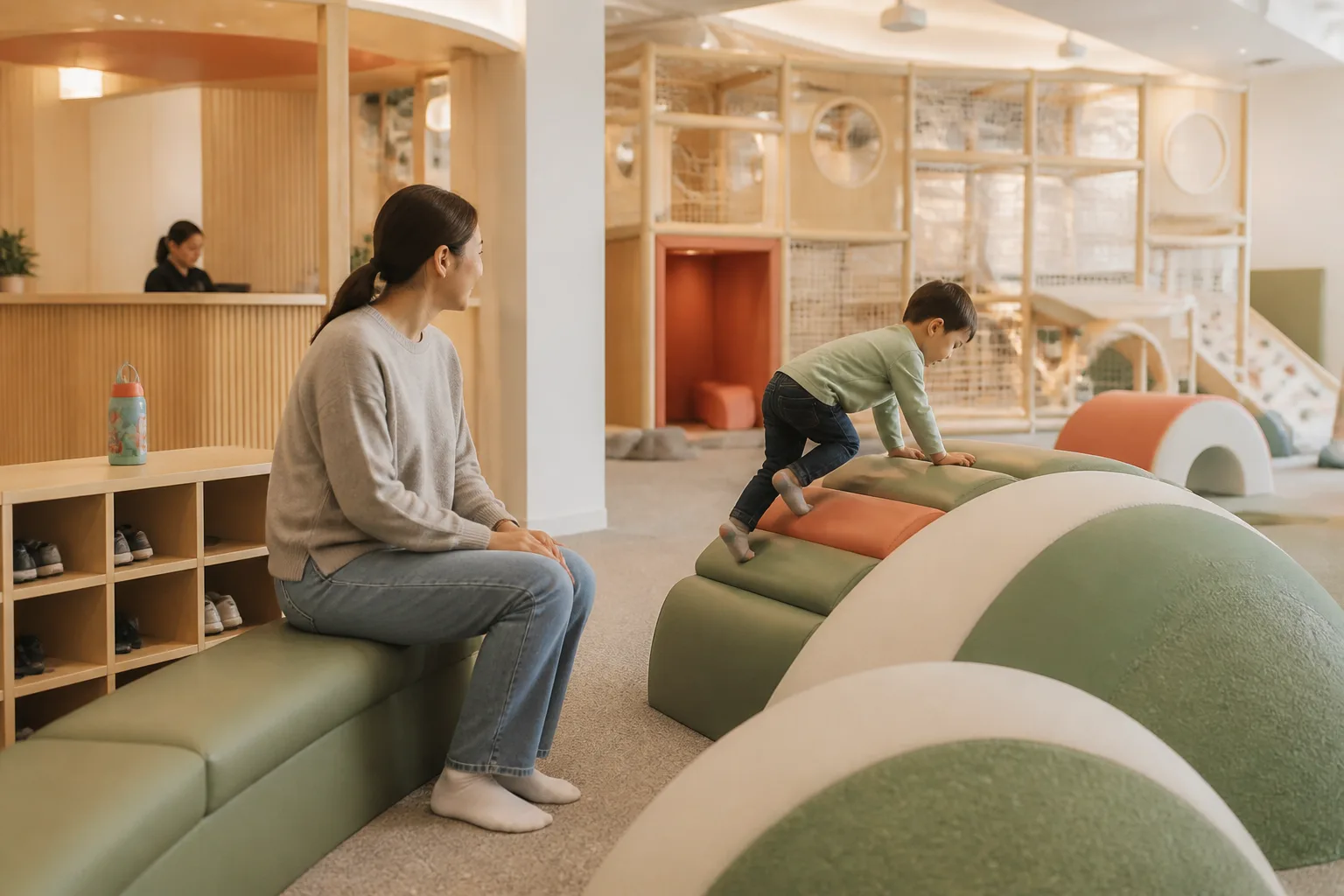
Figure out exactly what ordinary admission includes. Optional attractions can quickly change the total cost and create supervision headaches if siblings split up to do different things. Check to see if different areas share the same session clock.
Compare using the same questions
| Feature | What to establish | |---|---| | Usable play | Which equipment suits each child's age, height and mobility? | | Adult role | Must adults stay, and may they enter the equipment? | | Capacity | Is booking timed, and do parties share the floor? | | Breaks | Is quiet seating available, and is re-entry allowed? | | Cost | Which adults, socks and attractions cost extra? | | Access | Can the family reach seating, washrooms and usable equipment? |

Choose by the limiting factor
If you have mixed ages, your limiting factor might be the youngest child's zone or whether an adult can see the kids from a distance. For a sensory-sensitive child, the limiting factor might be the noise of a shared party. For a caregiver with mobility needs, it might be whether they can supervise without having to climb.
Once you know what your main constraint is, then you can look at travel and cost. A smaller venue nearby that works for everyone is often a better choice than a massive destination that ends up dividing your family across several different areas.
Before you decide, look at how an ordinary visit works rather than looking at party photos. Check how long the check-in process takes, whether children can easily find each other, where adults are expected to sit, and how the departure process works. These details will tell you which type of venue actually works for your family.